
June 5, 2025 14:30
 By the end of the year, the first flexible packaging incorporating digital watermarks will be hitting the shelves of some Belgian supermarkets as part of the HolyGrail pilot project.
This technology aims to distinguish food packaging from nonfood packaging waste for recycling purposes by embedding imperceptible information about composition and origin directly into the label or packaging.
This marks the first nationwide test of such a system using packaging from real consumer products.
The issue of closed-loop recycling for food-contact packaging is particularly relevant, as the upcoming Packaging and Packaging Waste Regulation (PPWR) requires that all food packaging contain at least 10% recycled material by 2030.
While this goal is already partially achieved for PET, no food-grade recycled material is currently available in significant volumes for polyolefin-based flexible packaging.
Although polypropylene (PP) and polyethylene (PE) films and bags are already collected and recycled separately, it is not currently possible to differentiate between packaging that contained food and that used for nonfood products such as cosmetics or personal care items.
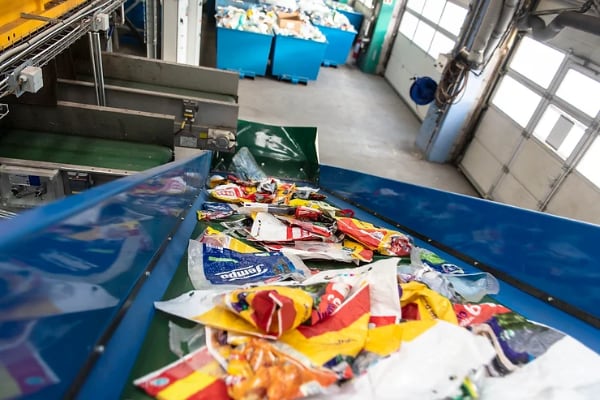 Identification technologies like digital watermarking could enable accurate collection of food-contact packaging, paving the way for mechanical recycling.
The pilot in Belgium is being coordinated by Fost Plus in collaboration with Digimarc, the technology provider for watermark application and detection, and is part of the HolyGrail 2030 – Circular Packaging Initiative led by AIM, the European Brands Association. The packaging will be used for products from major food companies including Ferrero, Mondelez and PepsiCo.
Starting in 2026, the stream of sorted polypropylene flexible packaging collected through curbside systems will be sent to the Hündgen sorting center in Germany, about 200 kilometers from Brussels. The facility is already equipped to detect digital watermarks thanks to its participation in the earlier HolyGrail 2.0 project. There, packaging will be separated into food and nonfood categories (including items without watermarks), with the food-grade fraction routed to recycling trials aimed at producing food-contact-compliant recycled plastic.
Following the initial operational phase, a cost-benefit analysis will assess the scalability of the system, including potential applications for the recovered material. Additionally, the ability to analyze sorted packaging by product reference will offer insight into consumer behavior in waste separation, supporting new strategies in packaging design and sustainability.
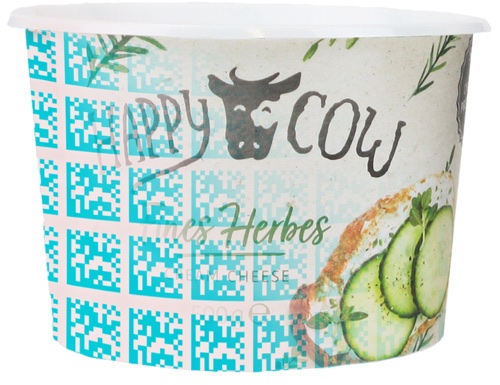 The HolyGrail 2.0 system, under development for several years, incorporates digital watermarks into the plastic material used for packaging. These postage-stamp-sized tags are embedded across the entire surface or label of a package and are invisible to consumers. The watermark pattern is created through microtopological modifications to the base material and replicated into a mosaic-like graphic.
This creates a kind of digital passport, where even a fragment of the packaging can provide data about the manufacturer, material used and food-contact status. These details are read and interpreted by high-resolution cameras integrated into sorting lines at waste management facilities.
© Polimerica - Reproduction prohibited, all rights reserved
