
August 5, 2025 14:34
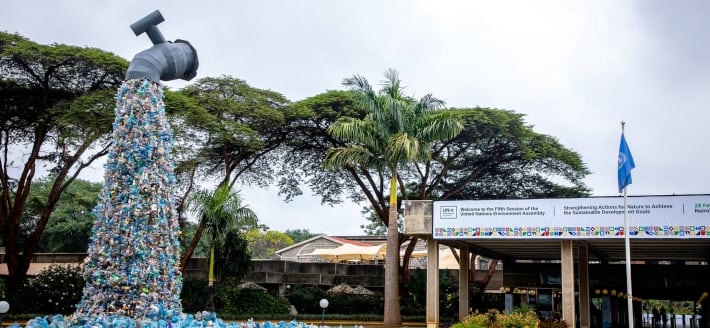
 After the deadlock in Busan, negotiations on the international treaty to end plastic pollution resume today in Geneva with an additional session known as INC-5.2.
Over the next 10 days, representatives from 179 countries and more than 1,900 observers from academia, NGOs and industry will seek to bridge gaps in the text and reach a shared framework by the 2040 deadline.
The plastics industry, through organizations like the Global Partners for Plastics Circularity (GPPC) and the World Plastics Council (WPC), reiterates its position: A global treaty must be not only ambitious, but above all practical, effective and implementable.
With only one final negotiating round remaining, industry voices urge delegates to focus on shared goals—waste management capacity building and systemwide circularity—rather than ideological standoffs.
 The industry’s core proposal centers on full life-cycle circularity: designing longer-lasting, repairable and recyclable products, capturing end-of-life materials, and feeding them back into the economy.
It stops short of calling for major reductions in plastic production—an approach championed by environmental groups—arguing instead for solutions that maintain plastic’s utility while minimizing environmental leakage.
The stark reality, industry says, is that 2.7 billion people still lack access to proper waste management. Closing this infrastructure gap must be a cornerstone of the treaty, alongside global eco-design standards and national recycling targets.
From a policy perspective, the WPC supports increasing the market value of plastic waste by mandating recycled content in products while preserving technology neutrality—whether through mechanical or chemical recycling. This could stimulate demand, guide investment in collection and sorting infrastructure, and reduce landfill reliance.
Another key recommendation is the liberalization of international trade in recyclable fractions. In regions without adequate processing capacity, moving materials to qualified operators with robust tracking and controls can transform waste into a resource.
 The industry’s preferred treaty structure combines global obligations with national action plans, avoiding a one-size-fits-all model. Common metrics on design, traceability and goals would be paired with national flexibility, backed by financial tools such as extended producer responsibility (EPR), private and blended capital, green bonds, and targeted infrastructure investment.
Environmental groups, meanwhile, push for a fundamentally different path: slashing virgin plastic production—by at least 75% by 2040 in Greenpeace’s proposal—eliminating single-use plastics wherever feasible, regulating chemicals and microplastics, and promoting reuse and full transparency. Their vision includes strong public financing for deep eco-design and reuse systems.
With such divergent stances and a geopolitical climate increasingly distracted by trade tensions and global conflicts, INC-5.2 promises to be a high-stakes and high-friction chapter in the fight against plastic pollution.
© Polimerica - Reproduction prohibited, all rights reserved
